
Jana Urban Space works with national, state, and urban local governments to strengthen the policy, regulatory, and institutional foundations of urban planning and design in India. Our policy work focuses on making urban transformation implementable, equitable, and scalable — by aligning laws, policies, design standards, institutions, and institutional processes.
Grounded in an understanding of on-the-ground challenges, our work moves beyond treating symptoms to address the root causes of urban planning and governance gaps. We support governments in translating long-term urban visions into clear, actionable frameworks that can be adopted, implemented, and sustained across cities.

National Urban Spatial Planning and Design (NUSPD) guidelines inform national urban planning frameworks. It was prepared as input to the revision of the Urban and Regional Development Plans Formulation and Implementation (URDPFI) under JnNURM – Phase 2.


Project Platinum (Partnership for Land Title Implementation in Urban Management), initiated in 2010 by the MoHUA (formerly, Ministry of Urban Development), to meet the pressing urban challenge of the absence of secure land titles in India.

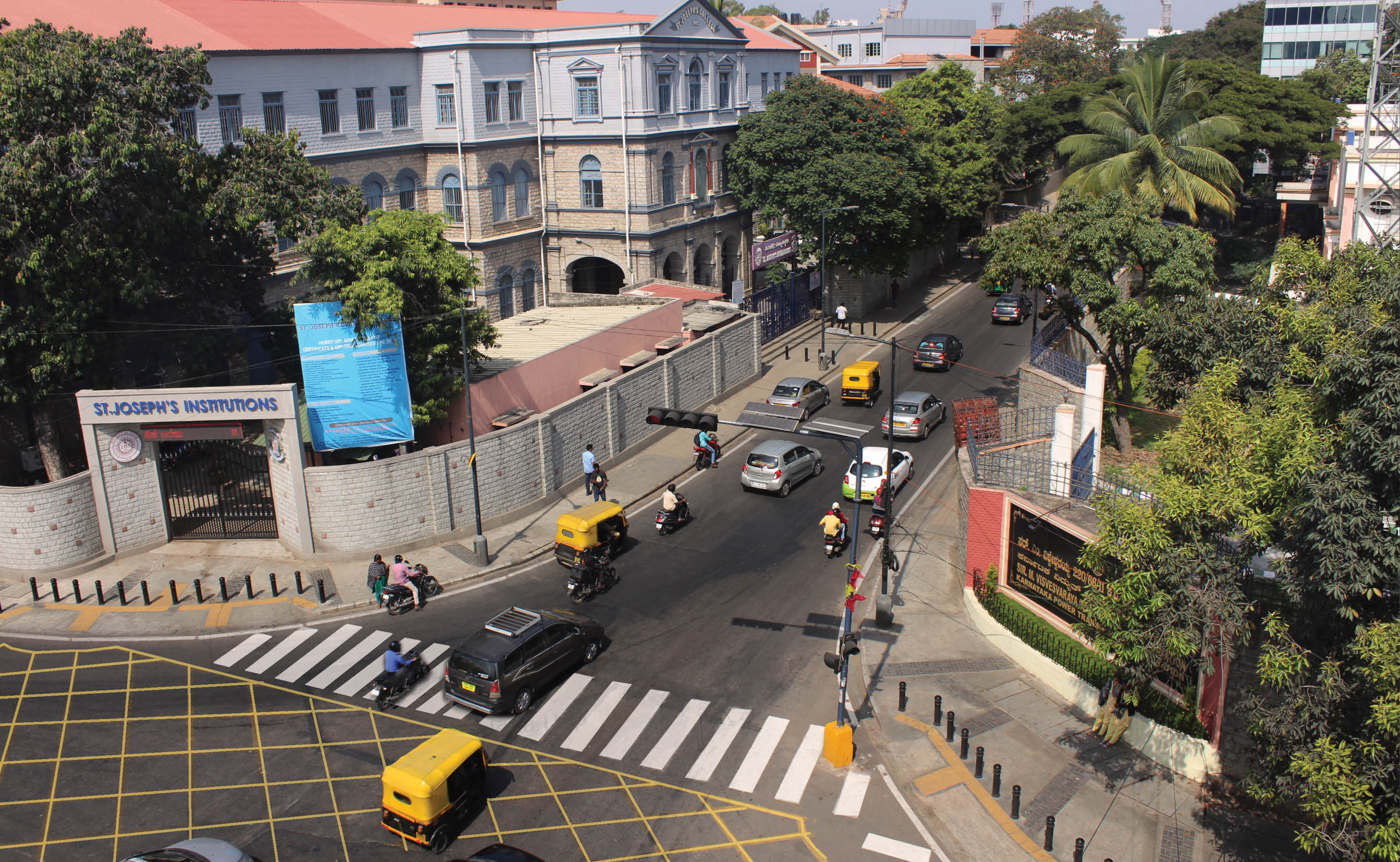
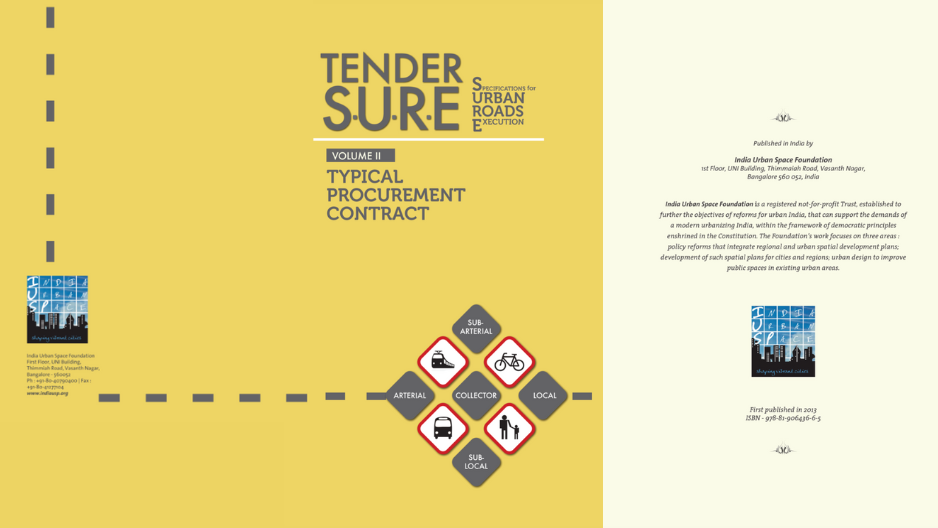
Tender S.U.R.E. (Specifications for Urban Road Execution), authored and published by Jana Urban Space in 2011 and India’s first comprehensive standard for complete streets design and execution, is now adopted across 35 cities in six Indian states.
To demonstrate proof of concept, Tender S.U.R.E. was initially implemented on 10 km of roads in Bengaluru’s Central Business District and 2.4 km in Hubballi–Dharwad (Karnataka), translating the standard into on-ground practice. The approach was subsequently mainstreamed and expanded, with 174 km of Tender S.U.R.E. roads taken up in Bengaluru (of which 134 km have been completed) and 20 km completed in Hubballi–Dharwad.
A Monitoring, Evaluation, and Learning (MEL) study comparing Tender S.U.R.E. and non–Tender S.U.R.E. roads in Bengaluru (2022) shows significantly improved outcomes, including:


‘Building 15-Minute Neighbourhoods – At the Intersection of Sustainable Mobility, Public Spaces, and Climate Action’ is a design guideline and implementation toolkit that advances neighbourhood-level, people-centric, low-carbon urban development. It outlines an integrated approach combining land use, sustainable mobility, and public transport, supported by urban design interventions, citizen participation, and area-based strategies. The toolkit offers practical pathways for administrative leaders to operationalise these ideas and is informed by studies across four Bengaluru neighbourhoods — Whitefield, Indiranagar, Malleshwaram, and Chickpete.
The framework is also being extended to explore differentiated 15-minute neighbourhood models for varied urban contexts, including dense metropolitan neighbourhoods such as Chennai and campus towns, including university areas across Karnataka.

Jana Urban Space supported the drafting of the Bengaluru Outdoor Advertising Byelaws in 2018, which aimed to eliminate hoarding and visual pollution citywide.

Jana Urban Space is supporting the Urban Development Department, Government of Uttar Pradesh, in operationalising Tender S.U.R.E. through a decentralised, state-led framework for ULGs. Under this initiative, 275+ km of urban roads across 17 ULGs are being redeveloped based on the Tender S.U.R.E. principles.
Led by Jana Urban Space, OUDH is a state-level Project Management Unit under the Housing and Urban Development Department of the Government of Odisha. OUDH is envisaged to drive a structured, design-led approach to urban growth, playing a central role in shaping Odisha’s existing and emerging cities by integrating urban design, planning, infrastructure, municipal finance, data, and community engagement.