

The Manipal Academy of Higher Education (MAHE) in Udupi, Karnataka, is a multidisciplinary educational city. Spanning a footprint of 313 acres, the university supports a population of over 35,000 students across five diverse faculties. The university had three flagship campuses: Health Sciences Campus, Manipal Institute of Technology (MIT) Campus and T. A. Pai Management Institute (TAPMI). While the university serves as a regional landmark for innovation, its physical growth over several decades has resulted in a fragmented urban fabric where campuses are segregated by both administrative boundaries and major regional infrastructure.
Currently, the Udupi – Agumbe Highway (NH-169A) serves as a major arterial corridor that bisects the university, needing a safe and accessible approach to integrate high-volume regional transit with campus mobility. The Health Sciences Campus functions as an “open campus”, requiring enhanced measures for universal accessibility and traffic management. Similarly, MIT Campus functions as a “closed” campus where internal movement is currently reliant on a centralized shuttle and buggy system. High-traffic nodes like Tiger Circle present opportunities for significant infrastructure upgrades, specifically in the areas of continuous pedestrian networks, universal access, and weather-protected non-motorise transport (NMT) corridors. The “15-Minute Campus City” initiative aims to resolve these connectivity gaps by transitioning from a vehicle-oriented landscape to a integrated, walkable, and student-centric environment.
Jana Urban Space serves as the strategic urban design partner to develop the campus master plan by integrating MAHE’s core principles into a unified spatial strategy. Their role includes conducting a detailed landscape study, identifying underutilized spaces, engaging stakeholders through focus group discussions, and creating detailed design development proposals. They are also responsible for identifying and designing “Quick-Win” projects to provide immediate improvements to campus mobility and sustainability.

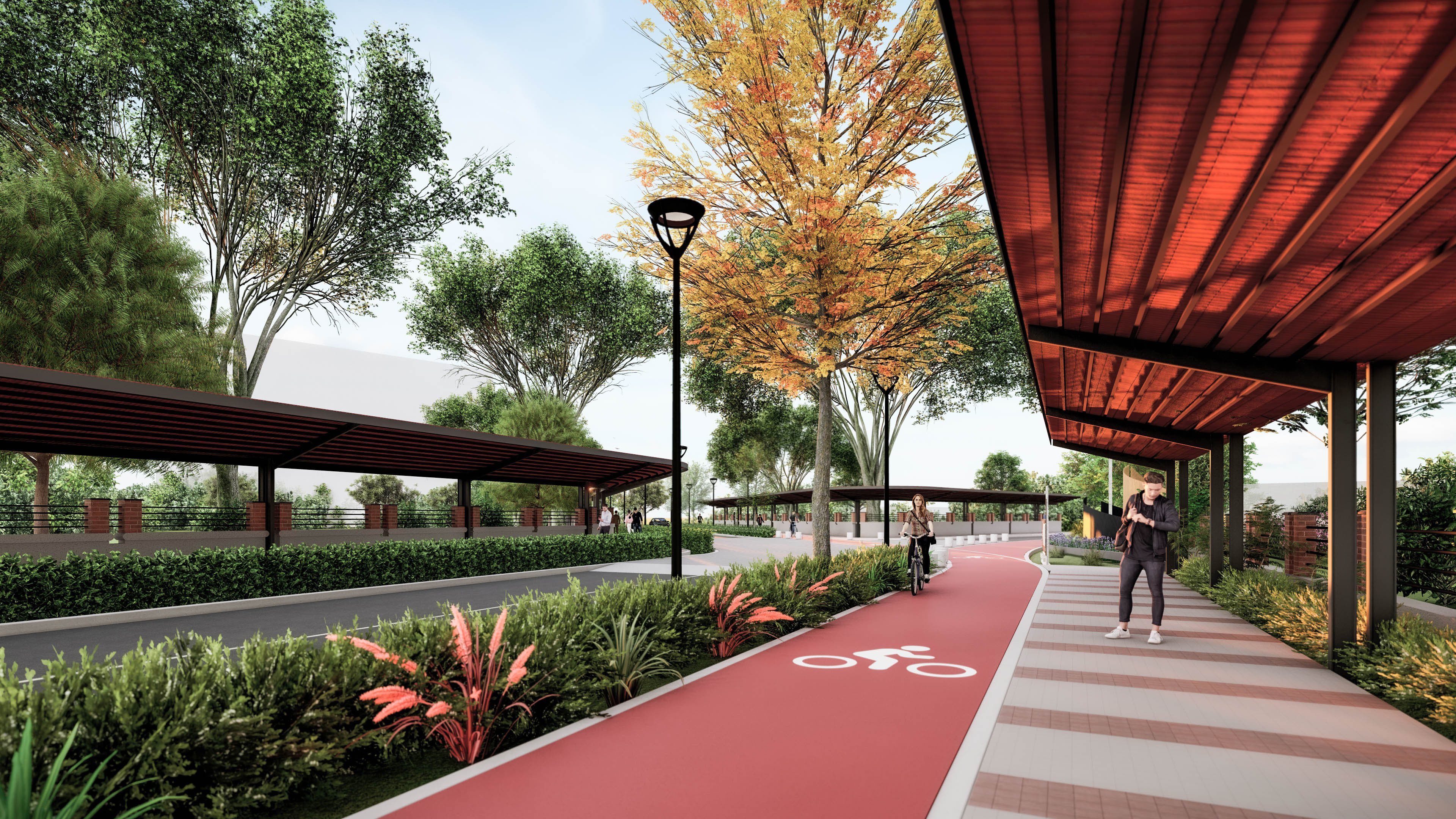
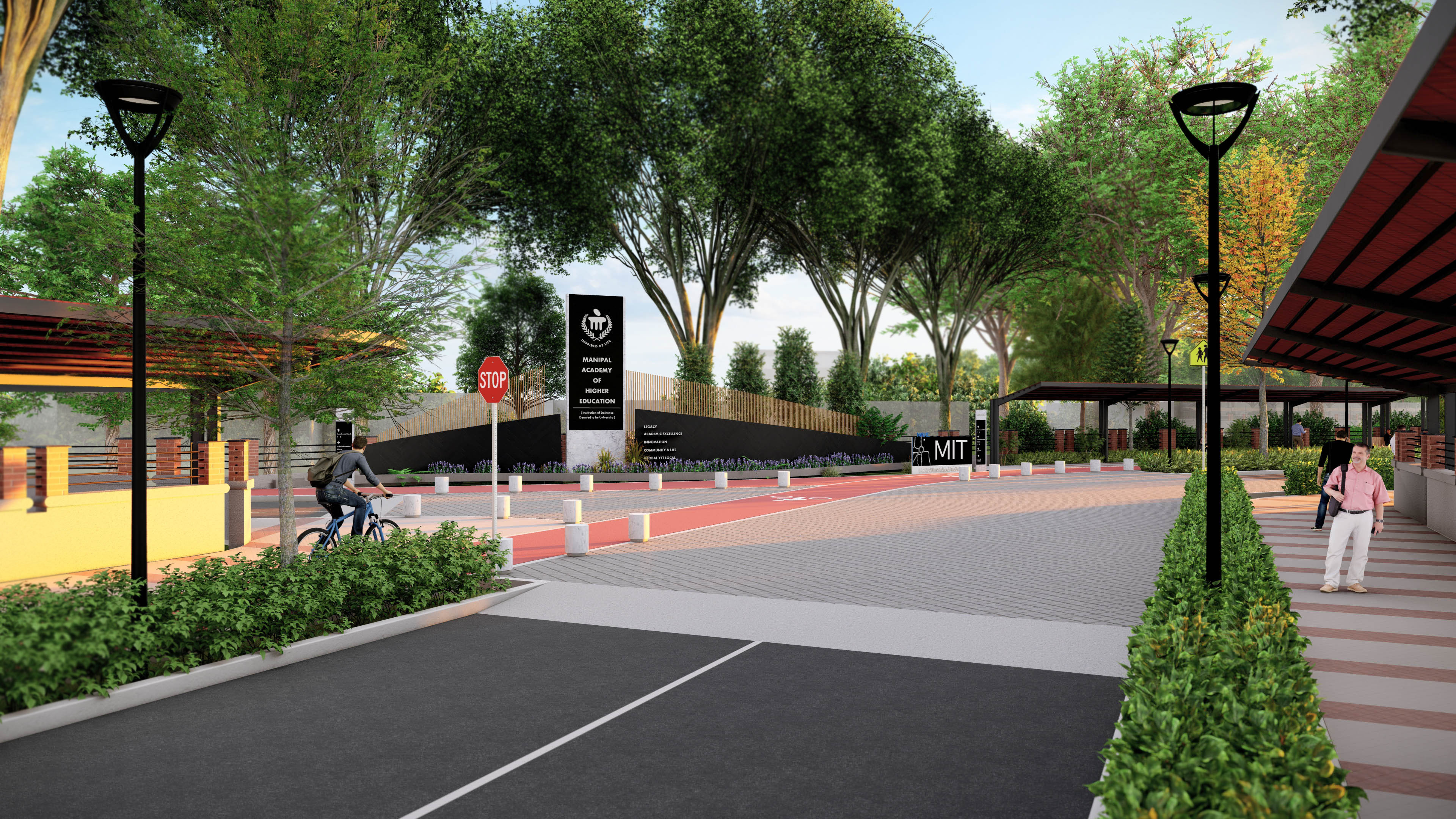
To achieve the “15-Minute Campus City” vision, the project employs a multi fold approach, ranging from regional transit integration to micro-level public space interventions. The strategy is built upon the MSPI (Move, Sustain, Play, Identity) framework:
i. Mobility & Connectivity (MOVE)
ii. Ecological Resilience & Landscape (SUSTAIN)
iii. Public Realm (PLAY)
iv. Institutional Identity & Wayfinding (IDENTITY)